Posts

Advantage of Vitamin K2

Image
 Advantage of Vitamin K2    Vitamin K2 or menaquinone is a basic vitamin that many individuals never know about until the point that they have their first kid and the medical caretaker controls a Vitamin K infusion. Tragically, this basic supplement is frequently ignored, and it is vital at all life stages, not only for infants or pregnant mothers. Different vitamins and minerals like Vitamin D, Magnesium and Calcium get the consideration they merit, however K2 is regularly overlooked with critical results. What is Vitamin K2 or menaquinone ? Vitamin K is a fat dissolvable vitamin that is vital for blood thickening and that adds to a sound heart, bones and insusceptible framework. There are a few distinct structures, mostly K1 and K2, however they act diversely in the body: Vitamin K1– (or phylloquinone) is characteristic frame found in greens and vex that is utilized by the liver for appropriate blood coagulating. Vitamin K2– (or menaquinone) is a more absorbable ty...

Quick Headache Relief

Image
Quick Headache Relief   At the point when your head is beating, you simply need it to stop. Get the realities about powerful cerebral pain treatment, including solutions and fast acting adapting tips. Cerebral pains are a standout amongst the most widely recognized types of ceaseless torment (second just to back inconveniences). Any individual who's endured the part agony of a cerebral pain — particularly a headache — knows how troublesome it can be to drive, work, and even carry on a discussion while your head is beating. Be that as it may, when a cerebral pain strikes, you can accomplish something beyond slither into overnight boardinghouse for it to leave. There are powerful cerebral pain medications accessible and approaches to discover fast help. We regard your protection. Cerebral pains are a standout amongst the most widely recognized types of incessant agony (second just to back inconveniences). Any individual who's endured the part torment of a cerebral pain — particu...

Muscular dystrophy

Image
Muscular dystrophy     Overview Muscular dystrophy is a group of diseases that cause progressive weakness and loss of muscle mass. In muscular dystrophy, abnormal genes (mutations) interfere with the production of proteins needed to form healthy muscle. There are many different kinds of muscular dystrophy. Symptoms of the most common variety begin in childhood, primarily in boys. Other types don't surface until adulthood. Some people who have muscular dystrophy will eventually lose the ability to walk. Some may have trouble breathing or swallowing. There is no cure for muscular dystrophy. But medications and therapy can help manage symptoms and slow the course of the disease. Symptoms The main sign of muscular dystrophy is progressive muscle weakness. Specific signs and symptoms begin at different ages and in different muscle groups, depending on the type of muscular dystrophy. Duchenne muscular dystrophy About half of peopl...

Bone density test

Image
Bone density test   Overview A bone density test determines if you have osteoporosis — a disorder characterized by bones that are more fragile and more likely to break. In the past, osteoporosis would be suspected only after you broke a bone. By that time, however, your bones could be quite weak. A bone density test enhances the accuracy of calculating your risk of breaking bones. A bone density test uses X-rays to measure how many grams of calcium and other bone minerals are packed into a segment of bone. The bones that are most commonly tested are in the spine, hip and sometimes the forearm. Why it's done Bone density Doctors use bone density testing to: Identify decreases in bone density before you break a bone Determine your risk of broken bones (fractures) Confirm a diagnosis of osteoporosis Monitor osteoporosis treatment The higher your bone mineral content, the denser your bones are. And the denser your bones, the stronger th...

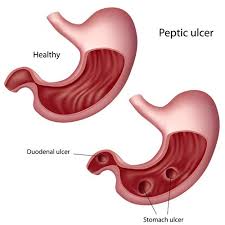
Peptic ulcer

Image
Peptic ulcer   Overview Ulcers Peptic ulcers are open sores that develop on the inside lining of your stomach and the upper portion of your small intestine. The most common symptom of a peptic ulcer is stomach pain. Peptic ulcers include: Gastric ulcers that occur on the inside of the stomach Duodenal ulcers that occur on the inside of the upper portion of your small intestine (duodenum) The most common causes of peptic ulcers are infection with the bacterium Helicobacter pylori (H. pylori) and long-term use of aspirin and certain other painkillers, such as ibuprofen (Advil, Motrin, others) and naproxen sodium (Aleve, Anaprox, others). Stress and spicy foods do not cause peptic ulcers. However, they can make your symptoms worse. Symptoms Burning stomach pain Feeling of fullness, bloating or belching Fatty food intolerance Heartburn Nausea The most common peptic ulcer symptom is burning stomach pain. Stomach acid makes the pain worse, as does having an empty stomach...

Prostate cancer

Image
Prostate cancer    Overview Prostate cancer Prostate cancer is cancer that occurs in the prostate — a small walnut-shaped gland in men that produces the seminal fluid that nourishes and transports sperm. Prostate cancer is one of the most common types of cancer in men. Usually prostate cancer grows slowly and is initially confined to the prostate gland, where it may not cause serious harm. However, while some types of prostate cancer grow slowly and may need minimal or even no treatment, other types are aggressive and can spread quickly. Prostate cancer that's detected early — when it's still confined to the prostate gland— has a better chance of successful treatment. Symptoms Prostate cancer may cause no signs or symptoms in its early stages. Prostate cancer that's more advanced may cause signs and symptoms such as: Trouble urinating Decreased force in the stream of urine Blood in semen Discomf...

Kidney stones

Image
Kidney stones Overview Kidney stones   Kidney stones (renal lithiasis, nephrolithiasis) are hard deposits made of minerals and salts that form inside your kidneys. Kidney stones have many causes and can affect any part of your urinary tract — from your kidneys to your bladder. Often, stones form when the urine becomes concentrated, allowing minerals to crystallize and stick together. Passing kidney stones can be quite painful, but the stones usually cause no permanent damage if they're recognized in a timely fashion. Depending on your situation, you may need nothing more than to take pain medication and drink lots of water to pass a kidney stone. In other instances — for example, if stones become lodged in the urinary tract, are associated with a urinary infection or cause complications — surgery may be needed. Your doctor may recommend preventive treatment to reduce your risk of recurrent kidney stones if you're at increased risk of developing them again. ...